Alistair Brownlee is a 2x Olympic Gold Medalist and co-founder of truefuels. We caught up with the former pro triathlete to get his top tips when it comes to triathlon nutrition and fuelling. In this guide Alistair gives his thoughts, among many other topics, on why Triathlon nutrition is its own discipline, race day fuelling by distance and shares his thoughts on fueling mistakes to avoid making when training and tackling that big goal.
Alistair Brownlee's Lesson in Fuelling for a Triathlon
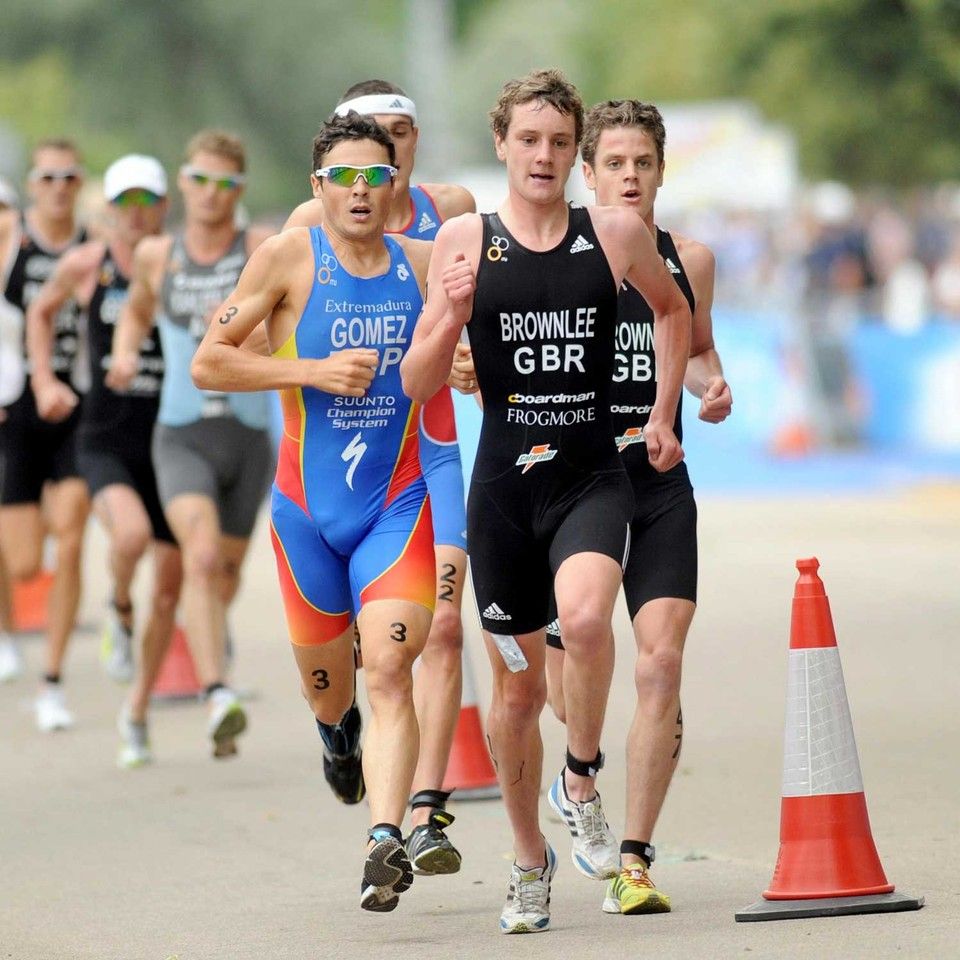
It was 2010, London, my home World Triathlon Series race. The air was warm and humid, the pressure massive. I was locked in a battle with Javier Gómez on the run. With 500 metres to go it was just the two of us. My plan was simple: stay on his shoulder and sprint. Then… nothing. A complete blackout. I woke up in a hospital bed surrounded by ice packs and IV lines. My core temperature had spiked above 41 °C. Exertional heat stroke. As I came round, I learned that 10 athletes passed me in those final metres while I was out of it.
That day taught me a brutal lesson: in triathlon, nutrition isn’t just an afterthought; it’s fundamental. Whether it’s supporting the body’s ability to move by contracting muscles, maintaining normal function through hydration and electrolyte balance, or supporting it to maintain normal core temperature.
Where truefuels comes in
That moment, combined with other nutrition struggles during my 18-year professional career, is why I co-founded truefuels. My simple belief has always been the same: nutrition is the reason most things go wrong in endurance sport, and it shouldn’t be. truefuels exists to provide the nutrition solutions that you can trust for training and racing. I believe that nutrition should never be the thing that slows you down in a session, or ruins your race — and that is my goal. Our core brand principle is “only what you need.” That’s why we’ve avoided artificial flavours and limited preservatives.
We set out to build a fuelling system that reflects real human physiology, not marketing gimmicks. The truefuels fuelling system has three components — Gel, Electro and CoreCtrl. Designed to deliver maximum carbohydrate to your muscles, meaningful electrolytes that support absorption, and targeted thermoregulation support when heat becomes the limiter. Nothing more. Nothing you don’t need. All our products are designed to work together as part of our stackable system, so you can tailor your solution to be right for you.
Here’s the long-form guide I wish I’d had as a serious amateur triathlete chasing my first 70.3 or tackling my fifth Ironman.
Why Triathlon Nutrition Is Its Own Discipline
Swim, bike, run. Three sports, three fuelling windows, one gut. That’s what makes triathlon nutrition uniquely challenging and why you can’t fuel the same way you would for a standalone marathon or bike ride. The swim compresses your stomach; the bike lets you take on more volume while you’re still pedalling hard; and the run makes taking on nutrition tough while your body is upright and jostling. Throw in the fact that everyone is different and it can feel a daunting process to get it right on race day.
I think most people get it wrong by treating fuelling as an afterthought. I’ve been there and have the scars (bad results) to prove it. They grab whatever gels are on the course or copy what the pros do without training their gut. The result? GI distress, bonking on the run, or overheating because hydration and electrolytes were an afterthought.
The Gut's part to play in Fuelling
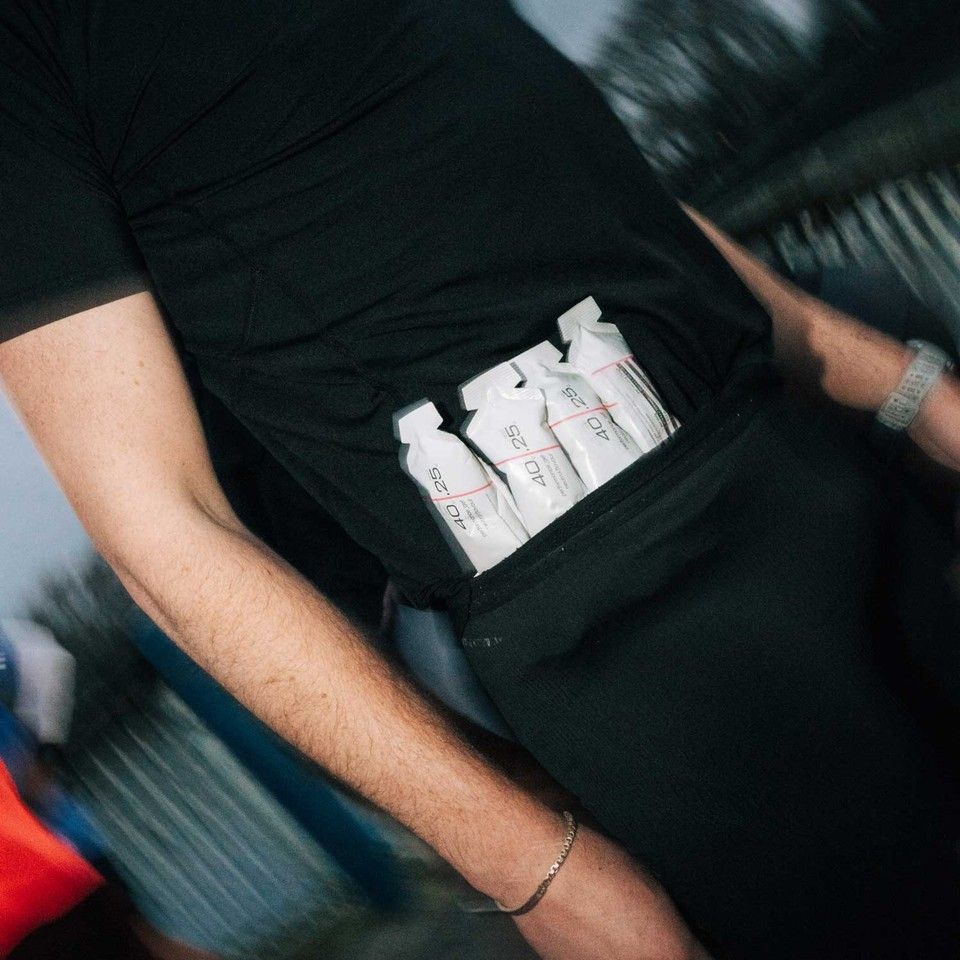
The gut is trainable, just like your legs. During a build block, I fuel most long (over 60 minutes) and intense sessions with 80–120 g of carbohydrate per hour using the same truefuels Gel products I’ll use on race day. That repeated exposure “trains” your gut to better tolerate and more quickly absorb carbohydrates by up-regulating the transporters in your intestine. These transporters are proteins in the intestinal wall that act as channels, moving glucose (via SGLT1) and fructose (via GLUT5) from the gut into the bloodstream.
The more transporters you have, and the more active they become, the greater the number of carbohydrate molecules that can cross into the blood. This significantly reduces the risk of stomach problems and increases the rate at which your body processes and uses carbohydrates for fuel. Under-fuelling in training costs you more than you think. You blunt training adaptations, slow recovery, increase illness risk, and arrive at race week with a gut that’s never practised high intake.
Training vs Race Day: Train the Gut Like You Train the Legs
How do I fuel in training? If the session is longer than 60 minutes or high intensity, I practise race-day fuelling. If it’s warm, I use the High Salt Gel to give me the extra electrolytes I need. I’ll also take an Electro before and after the session. Race-day fuelling is the exact nutrition strategy I will implement during competition. I still fuel during the shorter, easier sessions, just a little less, at around 40 g of carbs per hour. I’ve found that fuelling in training is now, in some ways, even more important than when I was a professional athlete. Because I need to finish sessions feeling good and maintain great mental focus for the rest of the day. Appropriate session fuelling and Electro use has completely transformed this for me.
During Race week, nutrition should be a real focus. I used to really focus on my nutrition: higher carbohydrate loading (8–10 g/kg body weight in the 24–36 hours pre-race), consistent electrolyte intake, and a final practice of the exact race-day plan 7–10 days out. If the event is warm, in addition to taking CoreCtrl, I’ll take an extra 2/3 Electrolytes for the two days and the morning before the race to pre-load.
Race-Day Fuelling by Distance
Here are practical, evidence-based targets for serious amateurs. These are starting points. The single most important piece of advice for race nutrition: Practise it in training at least 5 times before the event.
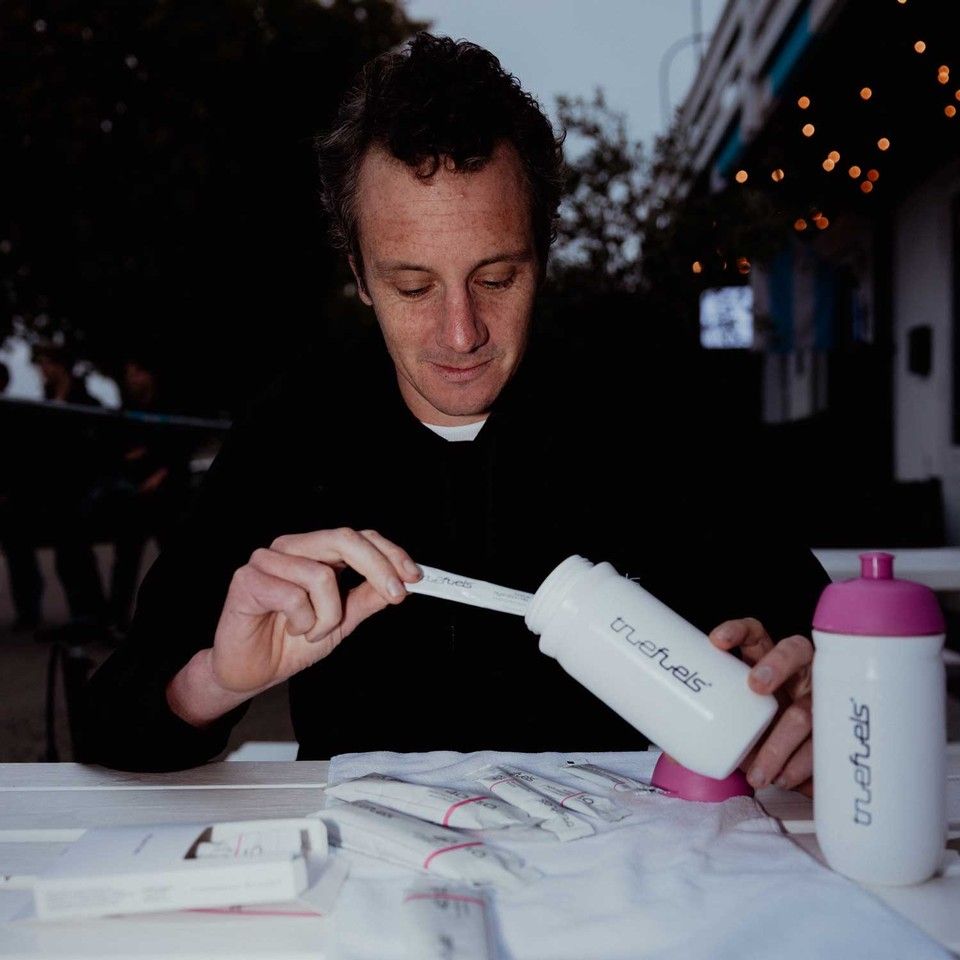
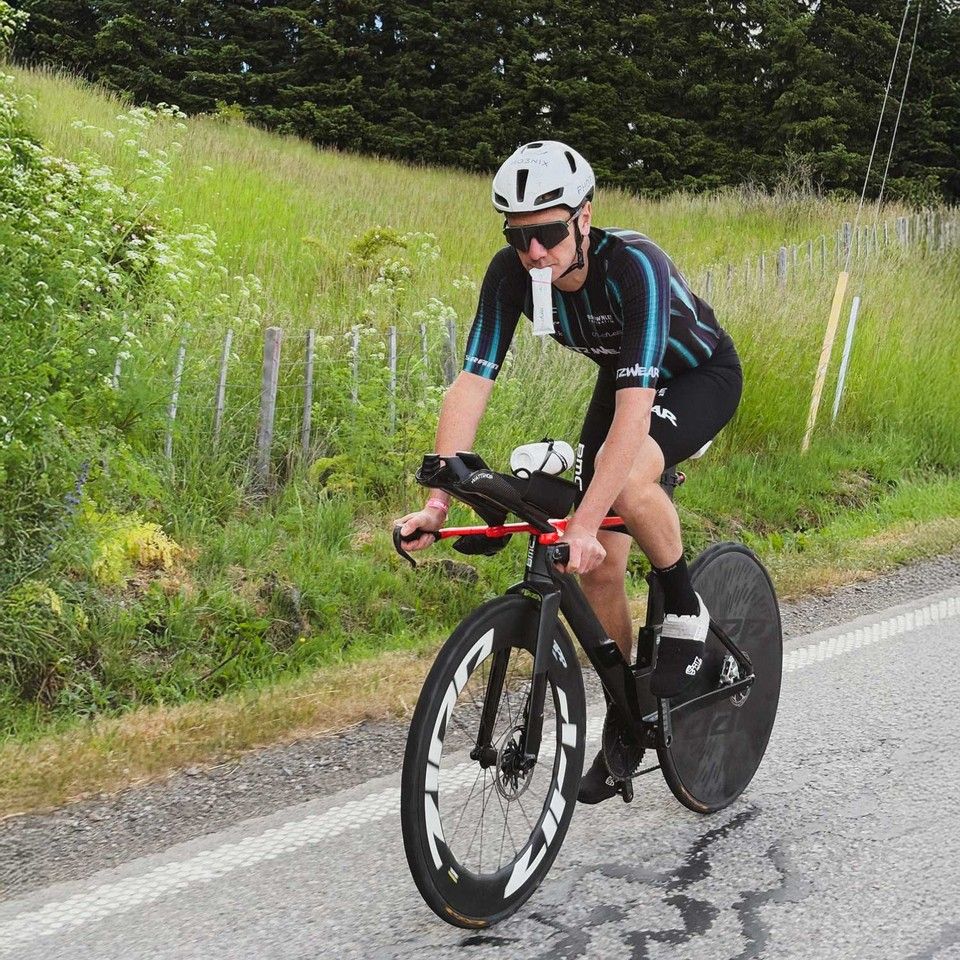
My tip: I find that combining my nutrition into one bottle is the best way to make sure I get what I need when I need it. That's why you only have to sip from that bottle and pick up water on the course. For example, when I was racing T100 distance, I would have 6 High Salt Gels in one bottle on the bike (240g Carbs and 6g Salt for two hours), and 3 High Salt Gels in a squeezy bottle for the run. I knew that a sip would be approx 10g of carbs, so all I needed to do was have one sip every 15 minutes.
Sprint Triathlon (750 m / 20 km / 5 km — ~60–90 minutes total)
- Carbs: 40–80 g/hour. 1-2 Gels on bike, 1 on the run if you need it. If it’s warm, use High salt Gel.
- Hydration: 400–600 ml/hour
Olympic Distance (1.5 km / 40 km / 10 km — ~2–3 hours)
- Carbs: 80+ g/hour. 1 Gel in T1, 2 per hour on the bike, 1-2 on the run. If it’s warm, use High salt Gel.
- Hydration: 500–1000 ml/hour.
Race Nutrition is important for shorter Triathlon distances, but it’s absolutely essential for longer events. If you don’t get it right, you come to a standstill. 70.3 / Half Ironman (1.9 km / 90 km / 21.1 km — 4–7 hours)
- Carbs: 80–120 g/hour possible with a trained gut. Aim for 2–3 truefuels Gels per hour on the bike, then 1–2 per hour on the run. If it’s warm, use High salt Gel.
- Hydration: 600–1200 ml/hour, more in heat. Ironman (3.8 km / 180 km / 42.2 km — 8–17 hours) Carbs: 80–120 g/hour possible with a trained gut. Aim for 2–3 truefuels Gels per hour on the bike, then 1–2 per hour on the run. If it’s warm, use High salt Gel. Hydration: 600–1,500+ ml/hour in warm conditions.
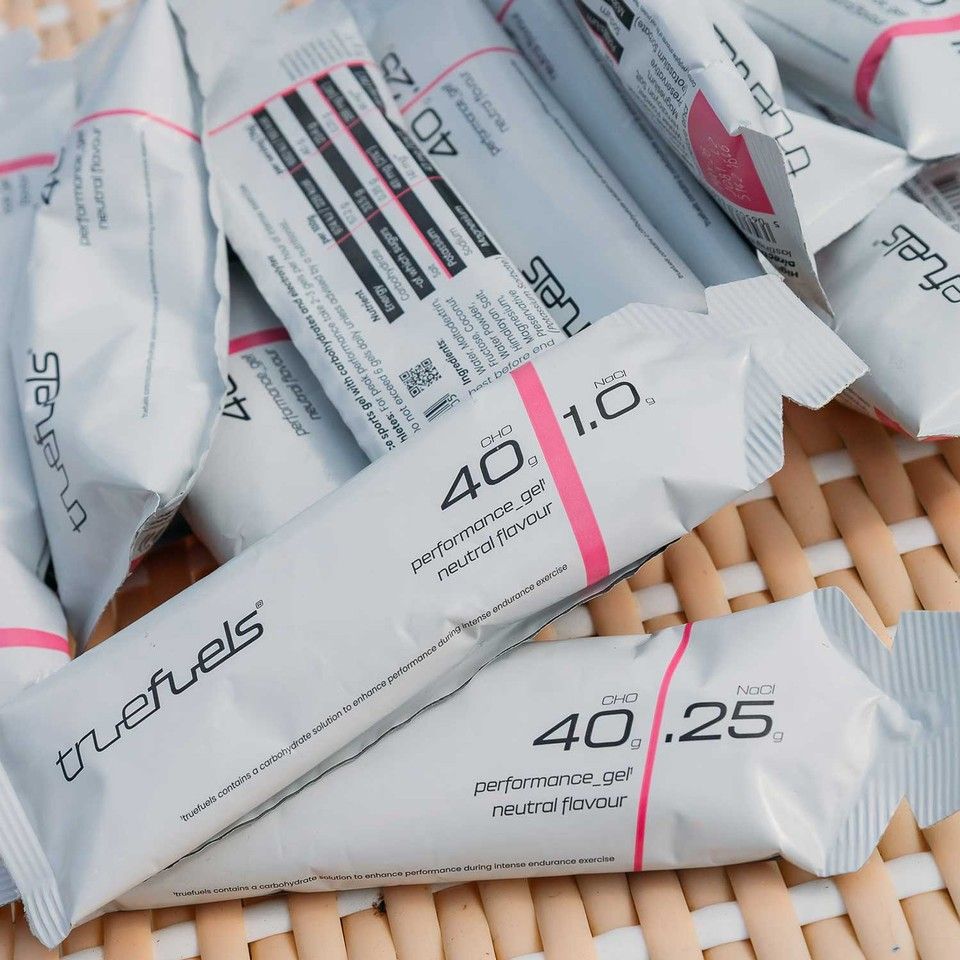
- Electrolytes: Critical. truefuels Gel already delivers 0.25 g or 1 g salt plus natural potassium (from coconut) and magnesium. Layer Electro for an extra 400 mg of sodium when it’s hot.

Think it might be hot?
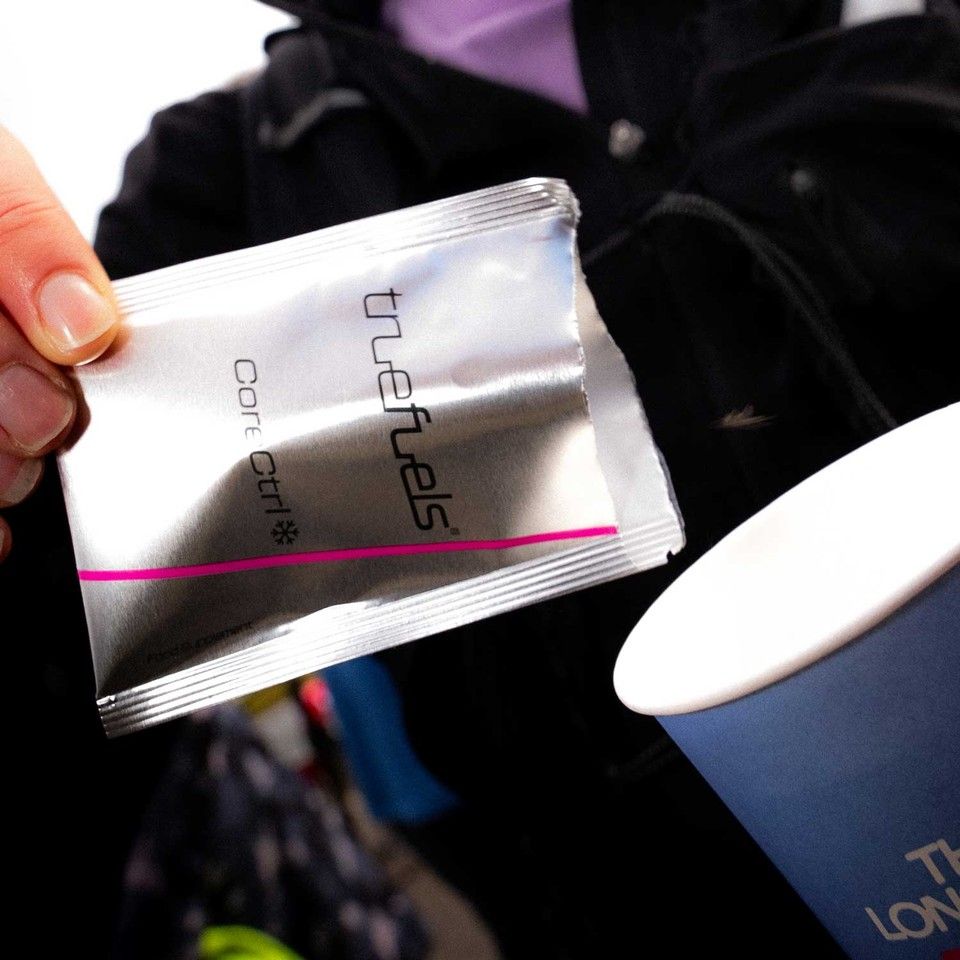
CoreCtrl is the third pillar of the truefuels system and introduces a completely new category: performance thermoregulation. In hot conditions, even perfect fuelling and hydration can only take you so far if your body can’t shed heat efficiently. CoreCtrl is designed to support your body’s natural cooling mechanisms by enhancing sweat gland activation, improving evaporative heat loss, and slowing internal heat storage. Its patent-pending formula combines a high dose of L-taurine with piperine for better absorption and a balanced electrolyte profile — all aligned with our “only what you need” philosophy.
You take one serving daily for 8 days before hot races or training blocks (mixed with 500 ml cold water, 30–60 minutes before exercise). Or, take it for two days on one day off if you weight under 60kg. It doesn’t replace hydration or pacing, but when used alongside truefuels Gel and Electro, it gives you the physiological edge to stay in control as temperatures rise and most athletes start to suffer.
I get asked all the time whether people should take it for an event in a few weeks, and the forecast calls for average conditions. If there is even a small chance the temperature could climb into the high teens or above, take it. There isn’t a downside, and the performance benefits are among the best I’ve ever seen in the scientific literature on exercise performance.
My Top Fuelling Mistakes to Avoid
- Never try something new on race day
- Under-fuelling in training
- Drinking to thirst on the bike (thirst is a lag indicator)
- Ignoring electrolytes and only replacing fluid
- Overcomplicating nutrition, combining too many different products that you’ll forget to take in the heat of the race
- Using products with extra irritants. Strong flavours, preservatives, and gelling agents all contribute to GI distress in high doses when your body is under stress
The truefuels System
In my early long-distance triathlon races in 2018 and 2019, I was really struggling with nutrition. I kept getting it wrong, either taking in too little and fading, or suffering stomach problems that ruined the race. So I decided to design my own system. Working closely with a nutritionist and testing extensively in the lab, I realised two key things: removing all the unnecessary additives completely eliminated the GI problems, and making everything simple to ingest in race situations (everything in one bottle where possible) removed all the stress and decision-making under fatigue.
The truefuels system is a fully stackable approach, designed from the latest sports science and tested by me in training, racing, and the lab. It has also been refined by feedback from 100 real co-creators, dedicated athletes who have put the products through thousands of miles of real-world use. truefuels Gel: 40 g carbohydrate in a proven 1:1 glucose–fructose ratio + meaningful electrolytes (0.25 g or 1 g salt options, natural potassium from coconut, magnesium). Fluid texture, water-mixable, unflavoured base with minimal additives to reduce osmotic load and GI distress.
truefuels Electro: Precision electrolytes (400 mg sodium, natural potassium, magnesium) with light natural flavours. CoreCtrl: Supports your body’s natural thermoregulation in heat by enhancing sweat response and evaporative cooling. Taken for 8 days before hot races, it works alongside Gel and Electro.
Key Take Aways
Key Take Aways
I had to shift my mindset from treating nutrition as an afterthought to something I should test, practise and train just like my swimming, biking and running. I wish I had made that change years earlier, but at least I’m still reaping the benefits today.
Like many of you, I still take on big endurance events, sometimes while physically underprepared. In those situations, I truly believe a solid, well-practised nutrition strategy is one of the biggest factors that gets you to the finish line. In December, I completed Patagonman — an Ironman-distance extreme triathlon in Patagonia — with almost no specific preparation: no swim training for 12 months, only one ride on a TT bike, and no runs longer than an hour in the months leading up to it. I would never advise anyone to be that under-prepared, but the one thing I was ready for was my nutrition.
Shop truefuels